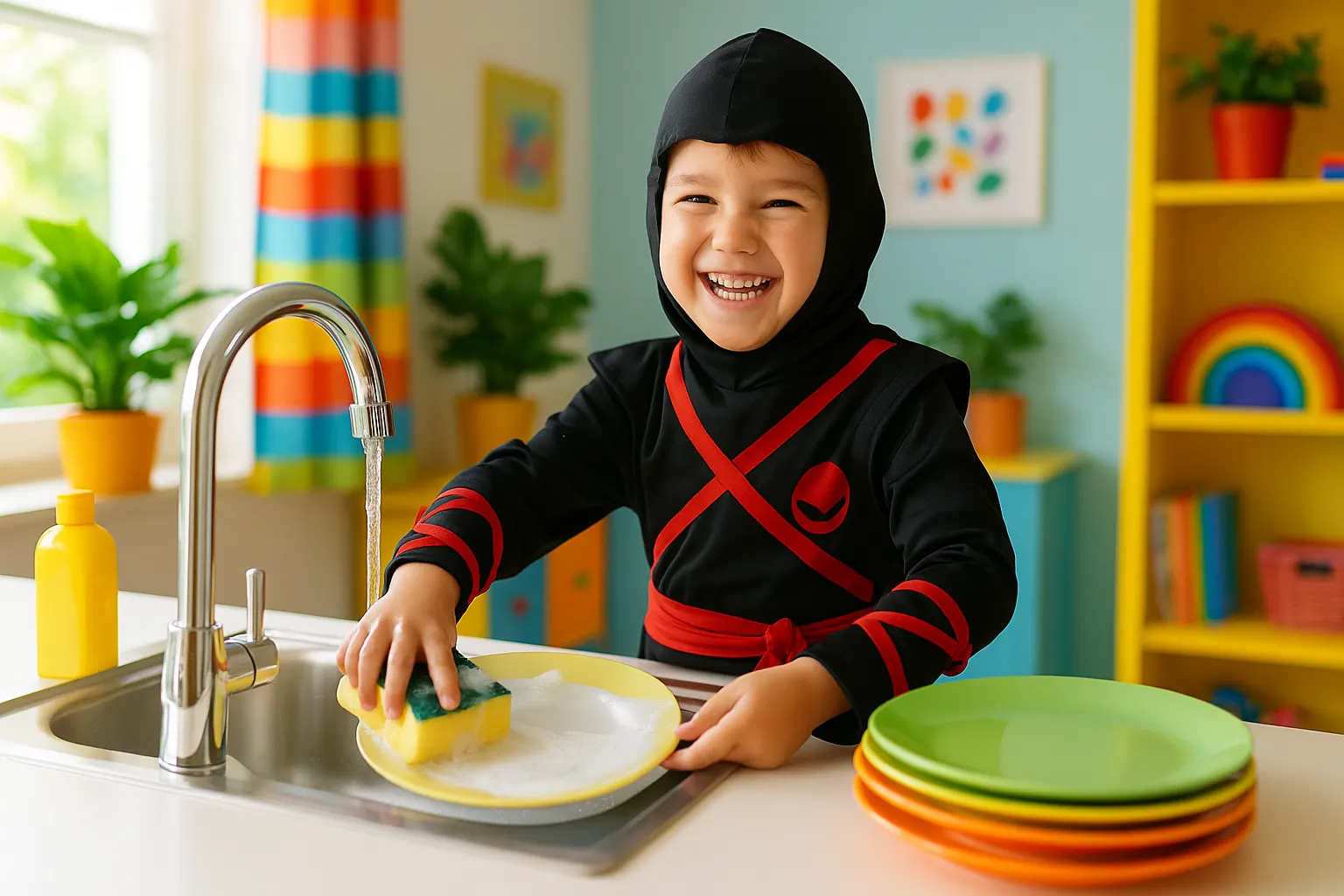
If you have a child who loves the idea of ninjas, you already have a built-in motivator for getting chores done without a fight. At Perez Martial Arts Academy, we have found that framing everyday responsibilities as ninja missions turns resistance into enthusiasm, and gets real skills practiced outside the dojo too.
Here is how to turn the lessons your child learns in our [kids martial arts](/kids-martial-arts) classes into practical habits at home.
Ninja Stealth Cleaning
Challenge your child to clean their room like a ninja on a mission: quiet, quick, and focused. Set a timer and see how stealthily they can tidy up without unnecessary noise or complaining. A small reward, a sticker, extra playtime, or a special snack, reinforces the behavior without turning it into a bribe for every single task.
Why This Works
Kids respond to a challenge framed as a game far better than a direct command. The ninja framing gives the task a sense of purpose and fun that "clean your room" alone rarely achieves.
Ninja Listening Skills
In class, students practice "ninja ears," listening carefully to multi-step instructions the first time they are given. You can recreate this at home by giving your child a short sequence of tasks, like setting the table, then grabbing their backpack, then putting shoes by the door, and seeing if they can complete all three without a reminder.
- Start with two steps for younger kids
- Add a third or fourth step as they build confidence
- Praise them specifically for listening well, not just for finishing
Master of Balance
Carrying laundry baskets or grocery bags with careful, controlled steps is a great way to practice the balance and coordination kids build in class. Turn it into a game: can they carry the basket across the room without dropping anything, just like balancing during a training drill?
Focused Ninja Homework Time
Martial arts teaches kids to tune out distractions and concentrate fully on one task. Set up a "Ninja Focus Zone" at home, a quiet, dedicated spot for homework or reading, free of screens and noise. Use a short breathing exercise, the same kind practiced at the start of class, to help your child settle in before starting.
Celebrate a focused work session with a short, fun break afterward. This mirrors the structure of a martial arts class: work hard, then enjoy a reward.
Ninja Speed and Efficiency
Some chores lend themselves well to a friendly speed challenge. How quickly can your child put away their toys without sacrificing quality? Set a timer, cheer them on, and track their best times on a chart. This turns a routine task into something closer to a game, which keeps kids engaged far longer than a simple instruction would.
Responsible Ninja Tasks
Age-appropriate chores like feeding a pet, watering plants, or organizing a shelf teach responsibility in a low-stakes way. Frame these as "ninja duties," tasks that a true ninja takes seriously because they understand the importance of caring for their environment and the people, and pets, around them.
A few ideas by age:
- Ages 4 to 6: feeding a pet, putting away toys, wiping down a table
- Ages 7 to 9: setting the table, folding laundry, tidying a bedroom
- Ages 10 and up: taking out the trash, helping with meal prep, managing their own homework schedule
Respectful Ninja Communication
Respect is one of the first things students learn in our classes, starting with a simple bow to instructors and training partners. At home, encourage your child to use the same respectful tone with family members. Simple phrases like please, thank you, and excuse me, practiced consistently, become second nature over time.
Mindfulness and Ninja Calm
After an especially energetic day, or before bedtime, use the same mindful breathing techniques your child learns in class to help them settle down. A few slow breaths, counted out loud together, can turn a tense bedtime into a calmer one.
Celebrate Your Ninja's Success
Just like we celebrate stripes and belt promotions at the academy, celebrate consistent effort at home. This does not need to be elaborate. A sticker chart, a special outing, or even just specific verbal praise, "I noticed you listened the first time today," goes a long way toward reinforcing good habits.
A Family That Made It Work
One mom from Millis told us she started using "ninja missions" for her son's morning routine after he began training with us. Getting dressed, eating breakfast, and packing his backpack used to take 40 minutes of nagging. Within two weeks of framing the routine as a ninja challenge with a simple sticker chart, mornings were calmer and faster, and her son was proud of his own progress.
Why This Approach Works So Well
The common thread across all of these ideas is that they borrow the same psychology our instructors use in class: clear expectations, small achievable steps, consistent positive reinforcement, and a sense of fun wrapped around the task. Kids are far more willing to take on responsibility when it feels like an adventure rather than an obligation.
A Week-by-Week Plan to Introduce Ninja Missions at Home
If this feels like a lot to start all at once, ease into it with a simple weekly plan.
- Week one: introduce ninja stealth cleaning for just one task, like tidying a bedroom
- Week two: add ninja listening skills with a short two-step instruction
- Week three: layer in a ninja focus zone for homework or reading time
- Week four: introduce one age-appropriate ninja duty, like feeding a pet or setting the table
Moving slowly gives each habit time to stick before adding the next one, which matters far more than trying to overhaul the whole household routine in a single weekend.
Troubleshooting Common Problems
My Child Treats Every Chore Like a Negotiation
Keep the ninja mission specific and time-bound. Vague chores invite negotiation. A timer and a clear finish line, "clean up the toys before the timer goes off," leaves less room for back and forth.
My Child Does the Task but Complains the Whole Time
Focus your praise on the ninja framing itself rather than the complaint. Over time, kids tend to drop the complaining once the challenge itself becomes genuinely fun and the reward feels reliable.
My Child Loses Interest After a Few Days
Rotate which mission is active each week, and let your child help invent new ones. Ownership over the game keeps it fresh far longer than a fixed chore chart imposed from above.
A Few More Ninja Mission Ideas by Skill
- **Balance missions:** carrying a cup of water across the room without spilling, just like balance drills in class
- **Memory missions:** repeating back a short grocery list or a sequence of instructions
- **Patience missions:** waiting quietly for a turn during a board game without interrupting
Extra Parent Questions
**Does this work for kids who are not interested in martial arts at all?** Yes. The ninja framing is simply a motivating theme. The underlying structure, small specific tasks with clear rewards, works for almost any child.
**How long should a ninja mission realistically take?** Keep most missions under fifteen minutes, especially for younger kids. Short, achievable missions build momentum far better than long, open-ended ones.
Keeping Siblings Engaged Without Competition Turning Sour
When more than one child is working on ninja missions at home, it helps to give each child their own mission rather than pitting them directly against each other. Friendly encouragement between siblings works better long term than head-to-head competition, which can quickly turn a fun game into an argument.
- Assign missions based on each child's age and ability so the challenge feels fair
- Celebrate each child's own improvement rather than comparing results directly
- Let older siblings help design missions for younger ones, which doubles as a leadership exercise
A Note on Consistency
Like anything built through repetition, ninja missions work best when they become a normal part of the routine rather than an occasional novelty. The households that see the biggest change are the ones who stick with the framework for at least a few weeks before judging whether it is working.
When to Expect Real Results
Most families notice a shift within two to three weeks of consistent ninja missions, not because the chores suddenly become easier, but because the child has practiced the routine enough times that resistance naturally fades. Stick with the framework through a few bumpy days before deciding whether it is working for your household.
Families who stay patient through the first few bumpy attempts tend to see the framework become a genuinely easy, low-conflict part of daily life.
Frequently Asked Questions
**What age is best to start using these techniques at home?** These ideas work well for kids as young as three or four, especially if they are already enrolled in our [Little Ninjas program](/little-ninjas).
**Do I need my child to be enrolled in martial arts for this to work?** No, though kids already training tend to respond especially well since the language and routines are already familiar to them.
**How do I keep the novelty from wearing off?** Rotate challenges every few weeks and let your child help design new ninja missions. Giving them ownership keeps it fresh.
**What if my child loses interest in a challenge quickly?** Keep tasks short, specific, and achievable. Long or vague "missions" are harder for kids to stay motivated about than quick, clear wins.
Bring the Ninja Mindset Home
If your child loves the idea of ninja skills and you want to see real training behind the fun, come try our [web special](/web-special): 4 weeks of classes and a free uniform for $49.99 at our Medfield academy. Families from Dover, Westwood, Walpole, Millis, and Norfolk train with us because Sensei Rolando Perez builds real character behind every kick and chore chart alike.
New Student Experience
Ready to See It In Person?
4 Weeks of Classes — $149 $49.99
Keep Reading

Family Goals
How Martial Arts Training Helps Medfield Families Set and Achieve Real Goals

Confidence
How Martial Arts Classes in Medfield Build Confidence, Discipline, and Leadership in Kids

Confidence
How Martial Arts Gives Kids the Confidence to Feel Safe and Secure

Focus & School