
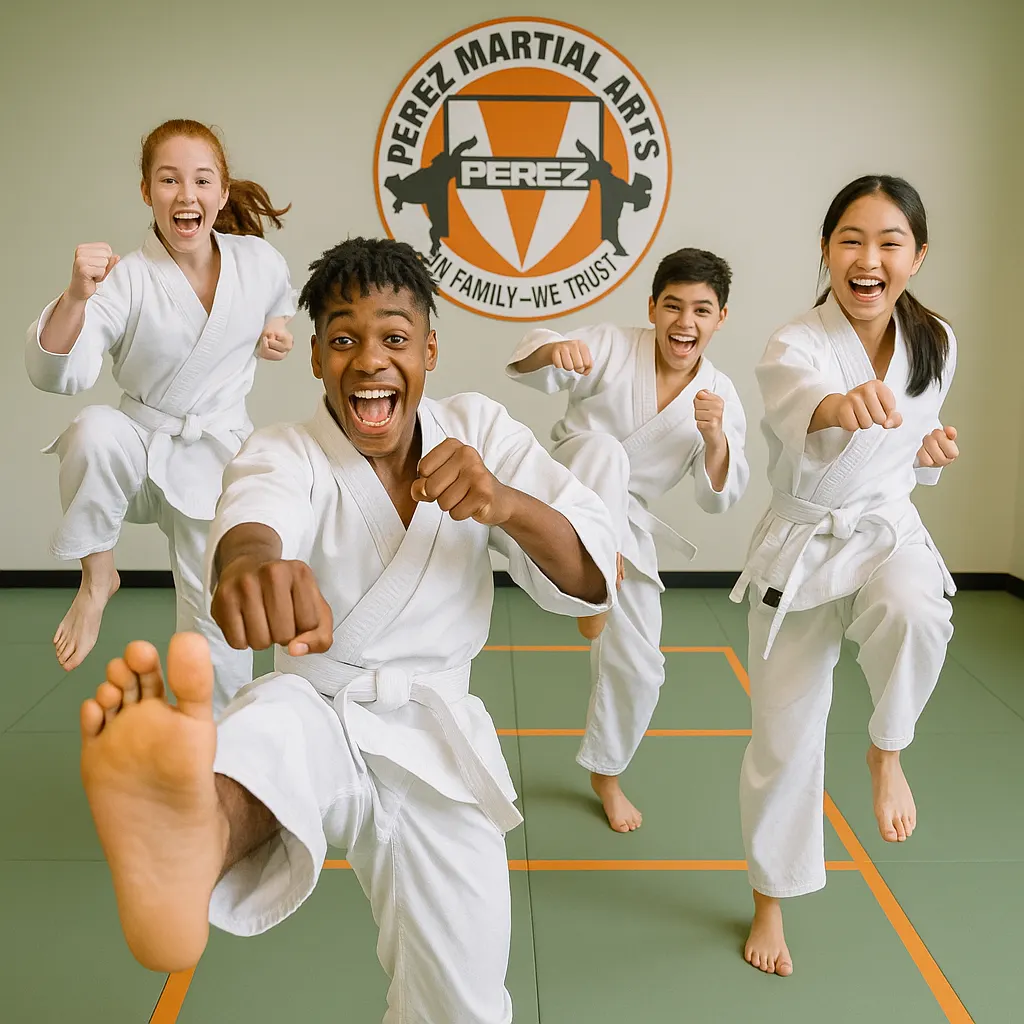
A lot of parents come to us not because they want their child to win a trophy, but because they want their child to feel okay in their own skin. The world can feel unpredictable to a kid, new schools, new friend groups, news they half overhear, and it is a parent's job to help them feel grounded. At Perez Martial Arts Academy in Medfield, we believe martial arts training is one of the most effective, and most fun, ways to build that sense of security.
This is not about turning kids into fighters. It is about giving them tools, physical, mental, and emotional, that help them feel capable no matter what comes their way.
Confidence Is the Foundation of Feeling Secure
Security starts with believing you can handle what is in front of you. Martial arts training builds that belief step by step. A child who has never thrown a punch feels uncertain the first time they try. After a few weeks of practice, that same movement feels natural.
This pattern repeats with every new skill: uncertain, then practiced, then confident. Our [kids martial arts](/kids-martial-arts) program is structured so that students are always working on something just slightly beyond their comfort zone, which is exactly where confidence grows.
Small Wins Add Up Fast
- Learning to fall safely without fear
- Successfully blocking a partner's strike for the first time
- Remembering an entire combination under light pressure
- Standing in front of the class to demonstrate a technique
Each of these moments chips away at a child's uncertainty and replaces it with capability.
Creating Emotional Resilience
Life does not go according to plan, and neither does a sparring match or a belt test. Martial arts gives kids a safe, structured place to practice falling short and trying again. A missed kick or a lost round in practice is low stakes, but the emotional skill of recovering from it is not.
Students learn to manage frustration, take a breath, and reset, rather than melting down or giving up. Over time, this becomes a habit they carry into school, friendships, and family life. Parents frequently tell us their child handles disappointment far better since starting training.
The Power of Routine and Structure
Children thrive on predictability. Knowing what to expect reduces anxiety, even when a child cannot articulate why. Every class at our academy follows a consistent structure: warm-up, review, new skill, practice, and a calm closing routine.
That predictability gives kids something steady to hold onto, especially during stretches of life that feel chaotic, like starting a new school year or adjusting to a family change. Families from Dover and Sherborn have told us their children specifically look forward to the reliability of class, even on weeks when everything else feels off balance.
A Safe Space to Grow and Express Feelings
Our instructors are trained to notice more than technique. If a student seems off, frustrated, withdrawn, or anxious, we take the time to check in. Kids need to know there is a place where adults are paying attention and genuinely care how they are doing, not just how well they perform a kick.
This emotional attunement is part of what makes martial arts training different from a typical extracurricular. It is a space where a child's whole self is welcome, not just their physical performance.
Building Trust and Relationships
Security also comes from relationships. In our classes, students build trust with instructors and with each other. Partner drills require kids to rely on someone else to train safely, and that shared responsibility builds real bonds.
Over time, students develop a sense of belonging that extends beyond the mat. They know their training partners, they know their instructors, and they know this is a community that has their back. That sense of belonging is one of the most powerful, and most underrated, contributors to a child's overall sense of security.
Practical Self-Defense Skills
There is something deeply reassuring about knowing you can protect yourself if you ever truly needed to. We teach age-appropriate self-defense concepts that are practical, not theatrical: how to create space, how to use your voice, and how to escape a grab safely.
Kids do not need to use these skills often, or ever, for the training to matter. Simply knowing they have options reduces anxiety about situations that once felt completely out of their control.
Mindfulness and Stress Reduction
Every class includes moments of focused breathing and controlled movement, which function a lot like mindfulness practice even though we rarely call it that to the kids. These techniques help children calm their nervous system quickly, a skill that pays off far beyond the dojo, whether it is before a test, after an argument with a sibling, or during a stressful transition at school.
Parent Peace of Mind
We hear from parents constantly that the biggest benefit of enrolling their child is their own peace of mind. Knowing your child has tools to manage stress, handle conflict, and feel physically capable takes a real weight off a parent's shoulders.
A Story From Our Academy
A mother in Westwood enrolled her daughter after a difficult transition to a new school left her anxious and withdrawn. Within a few months of consistent classes, her daughter's instructor noticed she was volunteering to demonstrate techniques in front of the group, something she would never have done at the start. Her mother told us the change at school mirrored what was happening at the academy: more eye contact, more willingness to speak up, and noticeably less anxiety about new situations.
How to Recognize When a Child Feels Insecure
Kids rarely announce that they feel unsafe or unsure of themselves. It usually shows up sideways. Watch for these signs, which parents and instructors both look for:
- Avoiding new activities or situations without a clear reason
- Trouble separating from a parent at drop off, even for familiar places
- Overreacting to small mistakes or criticism
- Difficulty making eye contact or speaking up in group settings
None of these signs mean something is deeply wrong. They are simply cues that a child could use more practice building a sense of capability, which is exactly what structured training is designed to provide.
A Step-by-Step Approach We Use in Class
- Start with a skill small enough that nearly every student succeeds on the first try
- Repeat it enough times that the success feels normal, not lucky
- Add a small new challenge once the first skill feels automatic
- Narrate the progress out loud so the student hears their own growth described back to them
This loop, small success, repetition, slightly bigger challenge, is the same loop that builds security in any area of life, not just martial arts.
What Parents Can Do Between Classes
- Ask your child to show you one thing they practiced that day
- Avoid jumping in to fix a frustrating moment immediately; let them try again first
- Name the effort specifically: "you kept trying even when that kick was tricky"
- Keep bedtime and morning routines predictable, since predictability outside of class reinforces the same sense of security
Additional Parent Questions
**My child gets anxious before every class. Is that normal?** Some pre-class nerves are common, especially early on, and usually fade as a child becomes familiar with the routine and instructors.
**How does this differ from other activities that also build confidence, like team sports?** Martial arts progress is individually paced. A student is compared mainly to their own past performance, not ranked against teammates, which tends to feel safer for kids who are still building confidence.
**Can this help a child who has experienced bullying?** Yes. Many families come to us specifically after a bullying experience, and the combination of physical confidence and emotional support tends to help kids feel less vulnerable over time.
Building Security Through Consistent Check-Ins
Beyond class structure, one of the simplest things a parent can do is build in a short, predictable check-in after training or school. Ask the same one or two questions every time, such as "what was the hardest part today" and "what are you proud of." Predictable questions, asked consistently, give kids a safe, reliable space to process their day out loud.
Over time, this habit teaches children that their feelings and experiences matter enough to be asked about regularly, which reinforces the same sense of security we aim to build in every class.
Why Consistency Between Home and the Academy Matters
Kids notice when the values they hear in one place contradict what they hear elsewhere. When parents reinforce the same language instructors use, calm under pressure, trying again after a mistake, respect for others, children experience less confusion about what is actually expected of them, which itself reduces anxiety.
Frequently Asked Questions
**Will martial arts make my child aggressive?** No. Our training emphasizes self-control, respect, and using skills only when truly necessary, not aggression.
**What age is best to start building this kind of confidence?** Earlier is easier. Our [Little Ninjas program](/little-ninjas) for ages 3 to 4 introduces these lessons in a playful, age-appropriate way.
**How quickly will I notice a change in my child?** Most parents notice shifts in confidence and emotional regulation within the first couple of months of consistent attendance.
**Do you address bullying specifically?** Yes. Our self-defense and confidence training directly helps kids feel less vulnerable to bullying, both physically and socially.
Help Your Child Feel Secure, Starting This Week
If you are raising a family in Medfield, Dover, Westwood, Walpole, Millis, or Norfolk and want to give your child real tools for confidence and security, try our [web special](/web-special): 4 weeks of classes plus a free uniform for $49.99. Come meet Sensei Rolando Perez and see why families trust our academy with the thing that matters most, their kids.
New Student Experience
Ready to See It In Person?
4 Weeks of Classes — $149 $49.99
Keep Reading

Family Goals
How Martial Arts Training Helps Medfield Families Set and Achieve Real Goals
Confidence
How Martial Arts Classes in Medfield Build Confidence, Discipline, and Leadership in Kids

Focus & School
9 Ways Martial Arts Helps Kids Stay Focused in School
Parent Guide