
Every parent knows the scene. Homework sits half finished while a pencil gets twirled, a shoe gets untied and retied, and a sibling in another room suddenly becomes the most interesting thing in the house. Kids are not wired to sit still and focus for long stretches, and that is normal. But there are ways to build that muscle, and at Perez Martial Arts Academy in Medfield, we have watched martial arts training do exactly that for hundreds of students.
Here are nine specific ways our training helps kids stay focused, both on the mat and in the classroom.
1. Mindful Breathing
Every class starts and ends with a few moments of calm, focused breathing. Kids are taught to notice their breath, slow it down, and use it as a reset button. This sounds simple, but it gives children a concrete tool to reach for when they feel scattered or overwhelmed, whether that is before a spelling test or after a rough recess.
2. Fun Focus Drills
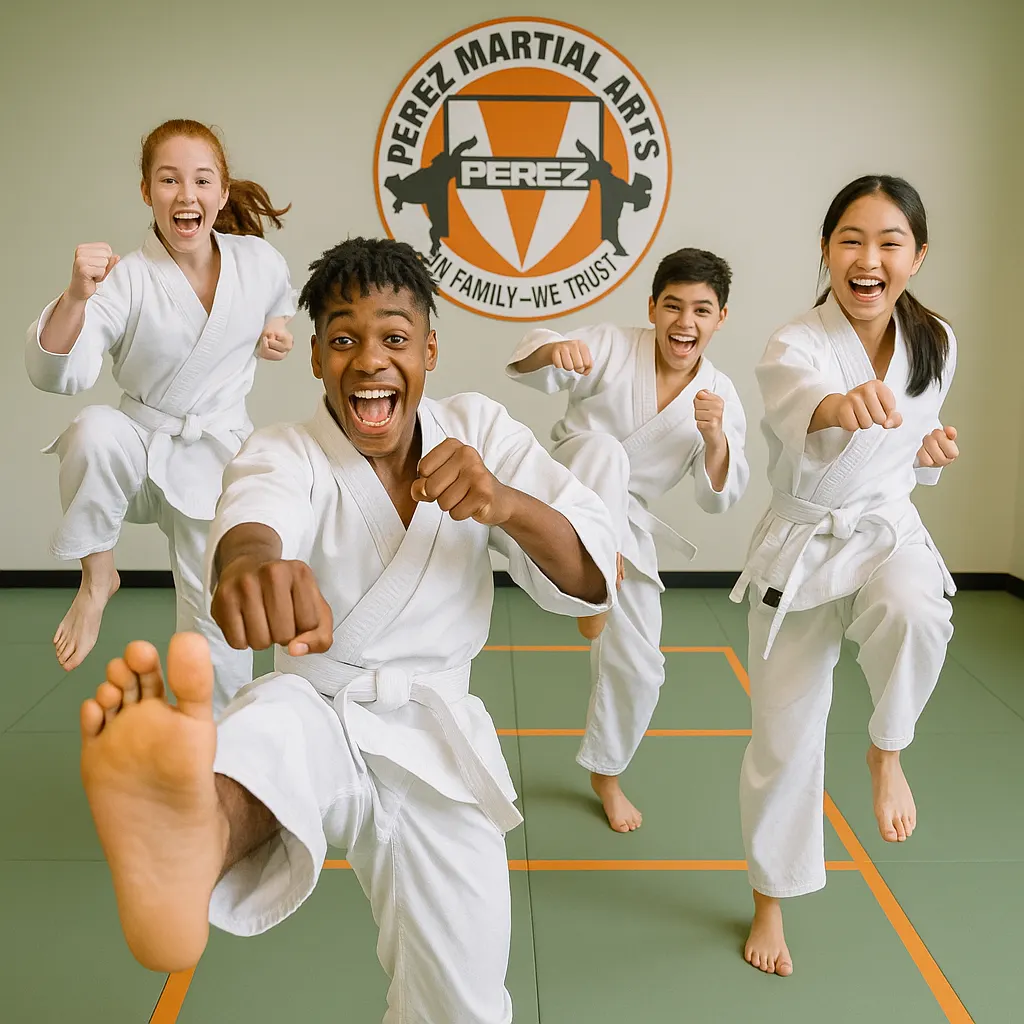
Balancing on one leg while remembering a three-move combination is harder than it sounds, and that is exactly the point. Our [kids martial arts](/kids-martial-arts) classes disguise serious concentration training as games. Kids do not realize they are building their attention span because they are too busy having fun.
Examples of Focus Drills We Use
- Mirror drills where a student copies an instructor's movement exactly
- Reaction games that require listening for a specific cue
- Balance challenges that combine with memory sequences
3. Rewarding Discipline
Kids respond to positive reinforcement far more than to criticism. In our classes, discipline and focus are celebrated loudly, a stripe earned, a technique mastered, a moment of real concentration recognized in front of the group. That positive association makes kids want to focus again next time, rather than viewing focus as a chore.
4. Confidence Boosters
It is hard to concentrate on something when you do not believe you can succeed at it. Each small win in martial arts training, landing a kick, remembering a sequence, earning a belt stripe, builds the kind of confidence that makes kids willing to lean into hard classroom tasks instead of avoiding them.
5. Structured Routine
Our classes follow the same predictable structure every time: warm-up, review, new material, practice, cool down. That structure trains kids to expect a rhythm, and over time, following a routine becomes second nature. This transfers directly to classroom routines, where structure also helps kids stay on task.
6. Teamwork and Peer Support
Kids focus better when they feel supported by the people around them. Partner drills in our classes require students to work closely with a training partner, building a sense of camaraderie that mirrors what happens in group projects and classroom teams at school.
- Students learn to encourage a partner who is struggling
- They learn to take turns and share instructor attention
- They build friendships that make showing up, and staying engaged, easier
7. Enhanced Physical Fitness
Physical activity is directly linked to better cognitive function. Regular martial arts practice gets kids moving, which improves blood flow to the brain and helps regulate energy levels throughout the day. A child who gets consistent physical activity tends to have an easier time sitting still and concentrating during the parts of the day that require stillness.
8. Respect and Listening Skills
Martial arts training is built on respect, for instructors, for training partners, and for the process itself. Kids practice listening carefully to multi-step instructions and following them without constant repetition. This habit of attentive listening carries directly into how a child listens to a teacher giving instructions in a classroom.
9. Learning From Role Models
Instructors at our academy, led personally by Sensei Rolando Perez, are not just teaching technique. They are modeling focus, patience, and discipline in real time. Kids naturally imitate the adults they respect, and when they see an instructor demonstrate calm concentration, they start to mirror that behavior themselves.
Putting It All Together at Home
Parents often ask what they can do between classes to reinforce these habits. A few ideas that work well alongside martial arts training:
- Set up a consistent, distraction-free homework spot, similar to how the dojo has a dedicated training space
- Use short breathing breaks before starting a hard task
- Celebrate effort and focus, not just finished homework
- Keep a visible routine chart so kids know what is coming next
A Real Example From Our Students
A nine-year-old student from Walpole used to lose focus within minutes of starting homework, according to his mom. After about three months of consistent classes, his teacher mentioned unprompted that he seemed noticeably more attentive during lessons. His mom credits the mindful breathing routine specifically, since he started using the same breathing technique before tests that he learned at the start of class.
A Simple How-To: Building a 10-Minute Focus Routine at Home
You do not need a full martial arts class to borrow this structure. Here is a short routine modeled on how our classes open, designed to help a child settle in before homework.
- Sit or stand quietly for one minute, breathing slowly in through the nose and out through the mouth
- Review out loud what needs to get done, in the order it will happen
- Pick the hardest task first, while focus is freshest
- Work for a set stretch, ten to fifteen minutes for younger kids, longer for older ones
- Take a short, timed break before moving to the next task
This structure mirrors our class format of warm-up, focus, work, and reset, and it gives kids a predictable container for effort instead of an open-ended pile of homework.
Common Focus Challenges and What Helps
A Child Who Rushes Through Work Carelessly
Slow the process down by having them narrate what they are doing out loud, the same way instructors ask students to describe a technique while performing it. Narration naturally slows down rushed movement, and rushed thinking.
A Child Who Gets Distracted by Noise or Siblings
Set up a dedicated, quiet workspace, similar to how a training space is kept free of clutter and distraction. Consistency in the environment matters as much as consistency in the routine.
A Child Who Gives Up the Moment Something Feels Hard
Break the task into a smaller first step. In class, we never ask a new student to attempt a full combination cold; we build it one movement at a time. Homework can work the same way.
Extra Questions Parents Ask Us
**My child was recently evaluated for an attention issue. Is martial arts a substitute for other support?** No. Martial arts training can complement other interventions by reinforcing structure and routine, but it is not a replacement for professional evaluation or support when that is needed.
**How many classes per week make the biggest difference for focus?** Two classes per week is a solid starting point. Consistency matters more than frequency, so steady attendance beats occasional, irregular visits.
**Will my child's focus improve outside of homework too, like during family conversations?** Many parents report exactly that. The same attention skills built in class tend to show up broadly, including during dinner table conversations and while listening to instructions at home.
How Teachers and Instructors Can Work Toward the Same Goal
While we are not a substitute for a classroom teacher, the habits built in martial arts training complement what teachers are already working on. Many parents find it helpful to briefly mention to a teacher that their child is building focus skills through structured activity outside of school, since it can help a teacher understand small, early improvements in attention.
A Final Word on Patience
Focus is a skill built gradually, not an overnight switch. Some weeks will look like real progress, and others will feel like a step backward. That is normal for any skill being built through repetition, whether it is a kick, a combination, or the ability to sit still through a long lesson. Consistency over months, not perfection week to week, is what actually produces lasting change.
One More Habit Worth Building: The Nightly Reset
Many of our strongest students end their evening the same way they end class, with a brief, calm reset. Spend two minutes reviewing the day out loud with your child: one thing that went well, one thing that was hard, and one thing to try differently tomorrow. This short nightly habit mirrors the closing routine of every class and helps kids process their day instead of carrying scattered energy into bedtime.
This kind of steady, structured practice is what separates lasting improvement from a short-lived burst of enthusiasm that fades after a few weeks.
Frequently Asked Questions
**How soon will my child's focus improve after starting classes?** Many parents notice small changes within the first month, with more significant improvement after consistent training for two to three months.
**Does my child need to already be good at sitting still?** Not at all. Our training is designed to build that skill gradually, starting with short, engaging activities for younger kids.
**What age group benefits most from focus training?** Kids of nearly any age benefit, though we see especially strong results in our [kids martial arts](/kids-martial-arts) program for ages 6 to 12.
**Can this help with an already diagnosed attention challenge?** While we are not a clinical program, many parents of kids with attention challenges report meaningful improvement through the structure and routine of consistent training.
Help Your Child Build Real Focus
If you are a parent in Medfield, Dover, Westwood, Walpole, Millis, or Norfolk looking for a fun, effective way to help your child concentrate better, try our [web special](/web-special): 4 weeks of classes and a free uniform for $49.99. Come see how Sensei Rolando Perez and our team turn focus into something kids actually enjoy building.
New Student Experience
Ready to See It In Person?
4 Weeks of Classes — $149 $49.99
Keep Reading

Family Goals
How Martial Arts Training Helps Medfield Families Set and Achieve Real Goals
Confidence
How Martial Arts Classes in Medfield Build Confidence, Discipline, and Leadership in Kids

Confidence
How Martial Arts Gives Kids the Confidence to Feel Safe and Secure
Parent Guide