
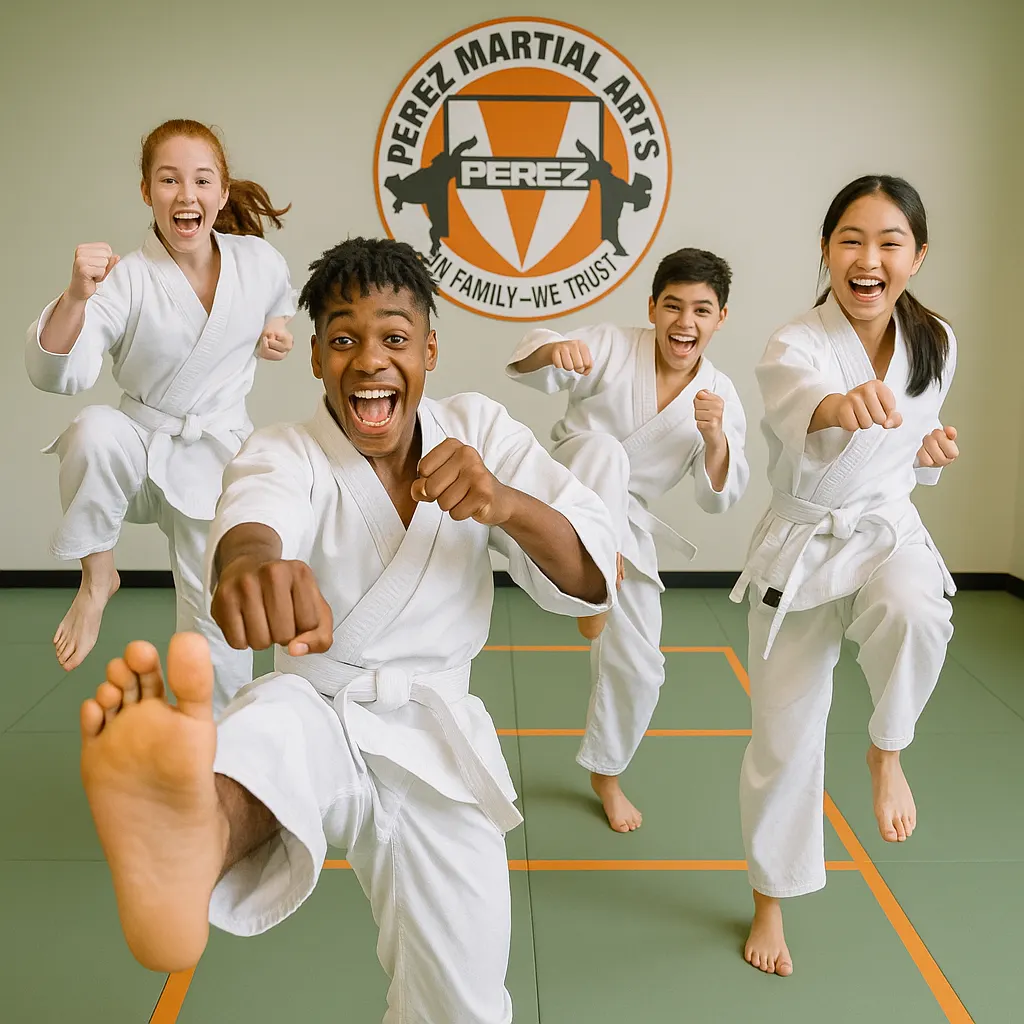
Distraction is the enemy of productive learning, and most students are not short on intelligence, they are short on the focus, discipline, and self-control needed to put that intelligence to use. At Perez Martial Arts Academy in Medfield, we have spent years watching martial arts training close that gap for students of every age.
Here is a closer look at exactly how training on the mat translates into more productive learning in the classroom.
Enhancing Focus Through Deliberate Practice
Every class at our academy demands sustained attention. Students watch a demonstration, absorb the details, and then execute the movement themselves, often multiple times with small corrections along the way. That repeated cycle of watch, absorb, execute trains the brain to concentrate deeply for meaningful stretches of time.
Students who build this habit on the mat carry it into the classroom. They are better equipped to absorb a lesson, retain details, and complete assignments without constant redirection.
Signs of Improved Focus Parents Often Report
- Fewer reminders needed to start or finish homework
- Longer stretches of sustained reading or independent work
- Better listening during multi-step classroom instructions
Developing Discipline and Consistency
Martial arts training rewards consistency over intensity. A student who shows up twice a week and practices steadily will outpace a student who trains sporadically, no matter how talented the second student might be. This lesson, that steady effort beats sporadic bursts, translates directly to academics.
Students in our [kids martial arts](/kids-martial-arts) program learn to value regular practice and are far more likely to apply that same consistency to homework and studying, rather than cramming at the last minute.
Building Self-Control and Emotional Intelligence
Self-control is tested constantly in martial arts training. Students have to manage frustration when a technique does not come together right away, stay patient with a training partner who is still learning, and control their impulses during contact drills.
These same regulation skills show up in the classroom when a student needs to stay calm during a hard test, wait patiently for their turn to speak, or manage frustration over a difficult assignment without shutting down.
Physical Activity and Cognitive Improvement
The connection between physical activity and brain function is well established. Exercise increases blood flow and oxygen to the brain, supporting memory, attention, and problem-solving ability. Martial arts training delivers that physical benefit while also engaging strategic thinking, since students have to read a partner's movement and respond in real time.
This combination of physical exertion and mental engagement makes martial arts particularly effective compared to purely repetitive exercise for supporting academic performance.
A Structured Learning Environment
Structure is essential for productive learning, and martial arts classes provide exactly that. Clear routines, consistent expectations, and a supportive but disciplined atmosphere help students build the sense of responsibility and accountability that supports success both in and out of school.
The predictability of a well-run class, knowing what comes next and what is expected, builds a sense of security that makes it easier for students to focus and absorb new information in other structured settings, including the classroom.
Promoting Positive Peer Interactions
Learning does not happen in isolation, and neither does martial arts training. Partner drills and group activities teach students to communicate clearly, collaborate effectively, and support one another's progress.
- Students learn to give encouraging feedback to a struggling partner
- They learn to accept correction without taking it personally
- They build friendships that make showing up to train, or to school, more appealing
These same interpersonal skills directly support group projects, classroom discussions, and the overall social environment of school.
Practical Life Skills With Long-Term Payoff
Beyond academic performance, martial arts training builds skills that matter well beyond the classroom: goal-setting, time management, perseverance, and critical thinking. These are the building blocks of success in any future career or life challenge, not just in school.
A Few Life Skills Built Directly Through Training
- Setting a specific, achievable goal, like earning a stripe within a set number of classes
- Managing a weekly schedule that includes training alongside school and family commitments
- Practicing patience while mastering a difficult new skill
- Learning to accept feedback and apply it without getting discouraged
Real Stories From Our Students
Parents and teachers alike have shared observations about students becoming more motivated learners after starting at our academy. One mother from Medfield told us her son's teacher specifically commented, without prompting, on his improved attention during lessons after about four months of consistent training. These kinds of observations echo across dozens of families we have worked with over the years.
Why This Matters More Than Ever
Attention spans are under constant pressure today, from screens, notifications, and a fast pace of life that rarely asks kids to sit still and focus deeply on one thing. Martial arts training offers a deliberate counterbalance, a space that genuinely demands focus and rewards it immediately and visibly.
A Step-by-Step Way to Apply Mat Focus to Homework
Here is a simple process based on the watch, absorb, execute cycle used in every class, adapted for homework time.
- Read or listen to the instructions fully before starting, the same way a student watches a demonstration before attempting it
- Repeat the instructions back in your own words to confirm understanding
- Attempt the first problem or paragraph slowly and carefully
- Check the work against the instructions before moving to the next step
- Take a short break between subjects, similar to the brief reset between drills in class
This structure gives students a repeatable process to lean on instead of starting each assignment from a blank, overwhelming place.
What Teachers Often Notice First
Teachers who work with our students sometimes mention specific, concrete changes rather than vague improvement. A few patterns we hear about most often:
- Fewer requests to repeat instructions during group work
- More willingness to attempt a hard problem before asking for help
- Better transitions between subjects or activities without losing focus
A Closer Look at Self-Control in the Classroom
Self-control built through martial arts training shows up in specific classroom moments: waiting to be called on instead of blurting out an answer, staying seated during a long lesson, or managing frustration over a confusing math problem without shutting down. These are not abstract virtues. They are specific, practiced behaviors that transfer because they are rehearsed so often on the mat.
Extra Questions Parents and Teachers Ask
**Can this help a student who is already doing well academically?** Yes. High-achieving students often benefit from the discipline and goal-setting structure just as much, since it helps them manage increasingly demanding workloads without burning out.
**Does the type of martial art matter for these benefits?** The structured, repetitive, focus-driven nature of traditional martial arts training tends to produce these benefits regardless of style, though consistency matters more than which program a child chooses.
**How do instructors reinforce classroom-relevant skills specifically?** Instructors regularly connect class lessons to school, reminding students that the same focus they use to learn a combination works just as well for a worksheet or a test.
How Parents Can Reinforce Classroom-Style Focus at Home
Parents play a real role in reinforcing what students practice in class. A few small habits make a measurable difference:
- Keep a consistent homework time and location so the brain associates that space with focused work
- Avoid interrupting a focused work session unless truly necessary
- Ask your child to explain what they learned that day in their own words, which reinforces retention the same way demonstrating a technique back to an instructor does
The Long View
Productive learning is not built in a single semester. It is built through months of consistent practice, both on the mat and at the homework table. Families who stick with both tend to see the clearest, most lasting results, not because of any single breakthrough, but because of the steady accumulation of small, repeated habits.
A Quick Checklist Before Homework Starts
Use this short checklist, borrowed from how students prepare before stepping onto the mat, to set up a productive homework session: clear the workspace of clutter, gather every material needed before sitting down, take three slow breaths, and state out loud which task comes first. This small ritual signals to the brain that focused work is about to begin.
Over time, this kind of deliberate preparation becomes automatic, and students start applying it to tests, projects, and long-term assignments without being reminded.
This small, repeatable checklist takes less than a minute but makes a measurable difference in how quickly a student settles into focused work, night after night.
It is a small investment of time that pays off across every subject, not just the one assignment in front of them that evening.
Frequently Asked Questions
**How soon can I expect to see academic improvements?** Most families notice changes in focus and discipline within two to three months of consistent training, though every child is different.
**Does my child need to be struggling in school to benefit?** No. These benefits apply to students of all academic levels, from those who need extra focus support to high achievers looking for an edge.
**What age group benefits most from this kind of training?** Our [kids martial arts](/kids-martial-arts) program for ages 6 to 12 is a particularly strong fit, though younger and older students benefit as well.
**Is this a replacement for tutoring or academic support?** No, but it complements academic support well by building the focus and discipline that make other forms of learning more effective.
Give Your Student a Productivity Boost
If you are a parent in Medfield, Dover, Westwood, Walpole, Millis, or Norfolk looking for a way to help your child learn more effectively, try our [web special](/web-special): 4 weeks of classes and a free uniform for $49.99. Come see how training with Sensei Rolando Perez supports success both on the mat and in the classroom.
New Student Experience
Ready to See It In Person?
4 Weeks of Classes — $149 $49.99
Keep Reading

Family Goals
How Martial Arts Training Helps Medfield Families Set and Achieve Real Goals
Confidence
How Martial Arts Classes in Medfield Build Confidence, Discipline, and Leadership in Kids

Confidence
How Martial Arts Gives Kids the Confidence to Feel Safe and Secure

Focus & School