
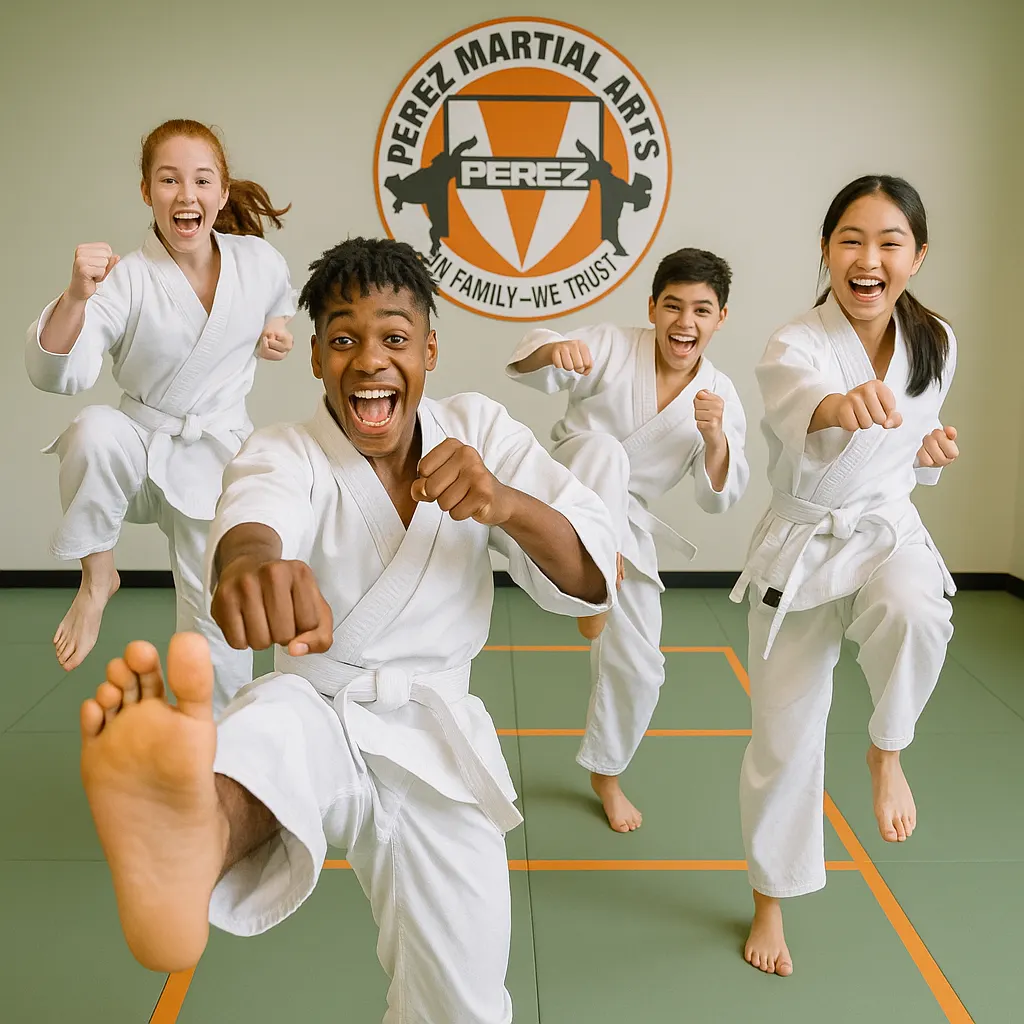
The teenage years bring real pressure: harder classes, more independence, and a growing list of responsibilities that can overwhelm even the most capable student. At Perez Martial Arts Academy, our [teens program](/teens-martial-arts) is built specifically around the idea that the discipline and confidence teens build on the mat carry directly into the classroom.
Here is a closer look at exactly how that connection works.
Discipline and Goal-Setting
Teen students in our program are encouraged to set specific, realistic goals, whether that is mastering a technique, earning a belt promotion, or improving their sparring. That goal-setting skill transfers naturally to academics, helping teens manage their time, prioritize assignments, and work methodically toward bigger objectives like a final grade or a college application.
Martial arts training also demands consistency. Teens quickly learn that progress requires regular practice, not occasional bursts of effort. That lesson reshapes how many students approach their schoolwork, trading last-minute cramming for steadier, more sustainable habits.
A Few Goal-Setting Habits Teens Build
- Breaking a big goal, like a belt test, into weekly milestones
- Tracking their own progress instead of relying only on a coach's feedback
- Adjusting their approach when something is not working
Confidence and Self-Esteem
As teens master new techniques and move up through belt ranks, their self-esteem grows in a way that is earned rather than given. That confidence makes teens more willing to participate in classroom discussions, ask questions without fear of embarrassment, and take on new academic challenges they might otherwise avoid.
Teens who train consistently also become more resilient in the face of setbacks. Missing a technique in front of the class and trying again teaches persistence in a very direct, visible way, a lesson that transfers naturally to a tough exam grade or a difficult class.
Improved Focus and Concentration
Training sessions demand real concentration. Teens learn to tune out distractions, focus on a specific task, and sustain that attention for extended periods. Techniques like mindfulness and controlled breathing, practiced regularly in class, help teens quiet their minds and direct their energy productively.
These same skills translate directly into the classroom, helping teens stay engaged during lessons, retain information more effectively, and manage the stress that often comes with exams and deadlines.
Better Behavior and Emotional Maturity
Teens involved in consistent martial arts training often show improved classroom behavior and greater emotional maturity. Martial arts fosters responsibility, respect for authority, and a genuine commitment to continuous self-improvement, traits that educators consistently value in the classroom.
Regular training also helps teens regulate their emotions more effectively. The structured environment of a martial arts class teaches teens how to manage stress, control impulses, and build empathy toward their peers, skills that matter just as much in a classroom or a friend group as they do in training.
Enhanced Physical Health Supports Academic Performance
Physical health and academic performance are closely linked. Teens who train regularly experience better cardiovascular health, increased strength, and improved flexibility, all of which reduce the kind of fatigue and low energy that can interfere with school attendance and focus.
The vigorous activity involved in martial arts training also boosts energy levels and mental alertness, helping teens stay sharp throughout a long school day rather than running out of steam by the afternoon.
Creating Positive Peer Relationships
Our [teens program](/teens-martial-arts) creates a supportive community where students build real friendships through shared effort. Training alongside peers encourages teamwork, healthy competition, and mutual encouragement.
- Teens learn to celebrate a training partner's progress, not just their own
- They build a support network that helps them navigate the social pressures of high school
- Positive peer relationships built in class often extend into stronger, healthier friendships outside of it
Academic Improvement and Long-Term Success
The discipline, confidence, resilience, and social skills teens develop through consistent martial arts training prepare them for far more than a belt test. These are the same qualities that support long-term academic achievement, future career success, and personal growth well beyond high school.
Parents consistently tell us they see meaningful changes in their teen's attitude toward schoolwork after they commit to regular training, more responsibility, more enthusiasm, and noticeably more confidence tackling difficult assignments.
A Student Story Worth Mentioning
One of our teen students struggled with motivation in school before starting training with us. Over the course of a year working toward higher belt levels, his instructors noticed a shift in how he approached challenges on the mat, more patience, more willingness to try again after a mistake. His parents later shared that his teachers had noticed the same shift in the classroom, describing him as more engaged and more willing to put in effort on assignments he previously would have brushed off.
Why Teens Respond So Well to This Structure
Teenagers are in a stage of life where they crave independence but still benefit enormously from structure and mentorship. Martial arts training offers both: teens set and pursue their own goals, but within a structured environment with clear expectations and consistent mentorship from instructors who genuinely care about their growth.
A Step-by-Step Approach to Goal-Setting for Teens
Teens respond well to a goal-setting process that gives them real ownership. Here is the process we walk teen students through at the academy, which works equally well applied to schoolwork.
- Choose one specific, meaningful goal, a belt test, a grade, or a skill
- Identify two or three concrete actions that move toward that goal
- Set a realistic timeline, not an open-ended one
- Check progress weekly and adjust the plan if something is not working
- Reflect on what worked once the goal is reached, and apply that to the next one
This structure gives teens a repeatable process they can use well beyond the dojo, including for college applications, job searches, or any long-term personal project.
How Training Helps Teens Handle Academic Pressure
High school brings real pressure: grades, social dynamics, and decisions about the future that can feel overwhelming. Training offers teens a reliable outlet where effort is rewarded predictably and progress is visible, which can balance out the less predictable nature of grades or college admissions.
A Few Specific Stress-Management Tools Teens Learn
- Controlled breathing to manage pre-test or pre-exam anxiety
- Reframing a setback as information rather than failure
- Breaking an overwhelming task into the next single step, rather than the whole project
Extra Questions Parents of Teens Ask
**My teen is already overcommitted with school and activities. Is this one more thing to manage?** Most teens find that two classes a week actually reduces overall stress, since training provides a reliable outlet and the discipline built in class tends to make homework time more efficient.
**How does Krav Maga or self-defense training specifically help teens?** Beyond physical skills, this kind of training builds situational awareness and confidence that many teens carry with them at school, in social situations, and as they gain more independence like driving or going out with friends.
**Will training interfere with sports my teen already plays?** Many teens train alongside other sports. The schedule is flexible enough for most families to combine both, and the fitness and discipline built through training often support performance in other sports as well.
Helping Teens Balance Training, School, and Everything Else
Balancing training, schoolwork, friendships, and often a part-time job is a real challenge for teenagers. A few approaches that help teens manage it all without burning out:
- Use a shared family calendar so training, school deadlines, and other commitments do not collide unexpectedly
- Encourage your teen to treat training time as non-negotiable, the same way they would treat a job shift or a scheduled exam
- Check in periodically about whether the schedule still feels sustainable, and adjust if it does not
Looking Ahead to College and Beyond
The discipline, goal-setting, and resilience teens build through training do not expire after high school. Many of our former teen students tell us years later that the habits they built on the mat, showing up consistently, setting specific goals, and handling setbacks without giving up, carried directly into college coursework and early careers.
A Quick Gut Check for Parents
If you are unsure whether your teen is ready to start, ask yourself three questions: does my teen need more structure, more confidence, or a healthy outlet for stress? If the answer to any of these is yes, training is worth trying. Most teens who hesitate at first end up telling us, a few months in, that they wish they had started sooner.
Starting now, rather than waiting for the perfect moment, gives a teen more time to build these habits before the pressures of junior and senior year arrive in full force.
Frequently Asked Questions
**Is it too late for my teen to start martial arts if they have no prior experience?** Not at all. Many of our strongest teen students started with zero experience and built skill and confidence from scratch.
**How does training help with stress around college applications or exams?** The mindfulness and emotional regulation skills built through consistent training give teens practical tools for managing high-pressure situations calmly.
**Will my teen need to compete?** Competition is optional. Many teens train purely for skill development, fitness, and the personal growth that comes with consistent practice.
**How many classes per week do you recommend for teens?** Two to three classes per week gives most teens enough consistency to build real skill and see meaningful personal growth.
Help Your Teen Build Confidence That Translates to the Classroom
If you have a teen in Medfield, Dover, Westwood, Walpole, Millis, or Norfolk who could use more discipline, confidence, and focus, try our [web special](/web-special): 4 weeks of classes and a free uniform for $49.99. Come see what our [teens program](/teens-martial-arts) can do both on the mat and in the classroom.
New Student Experience
Ready to See It In Person?
4 Weeks of Classes — $149 $49.99
Keep Reading

Family Goals
How Martial Arts Training Helps Medfield Families Set and Achieve Real Goals
Confidence
How Martial Arts Classes in Medfield Build Confidence, Discipline, and Leadership in Kids

Confidence
How Martial Arts Gives Kids the Confidence to Feel Safe and Secure

Focus & School